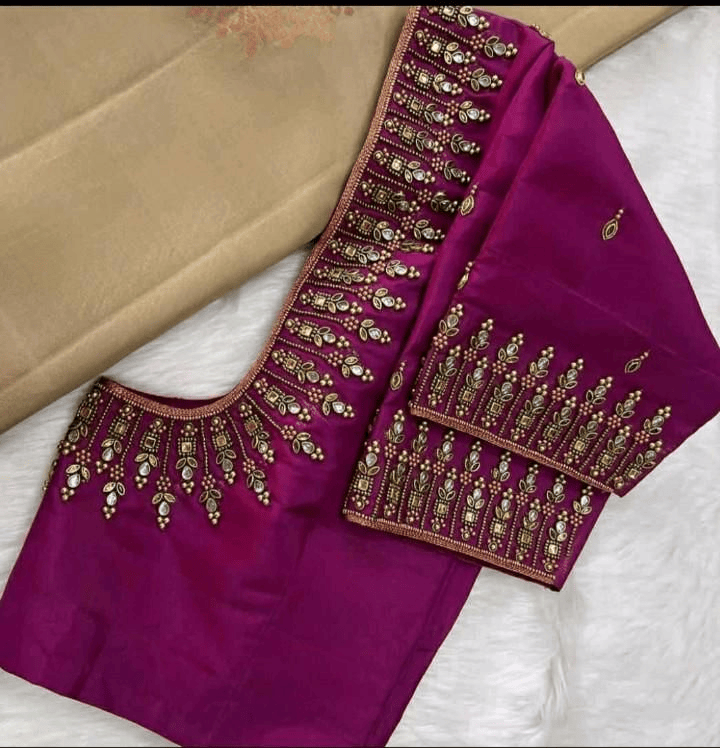
The origins of Aari can be traced to the 12th century. First developed by leather workers in the western Indian state of Gujarat, it was used to create embellished footwear. In later years, with the patronage of the reigning Mughals emperors, the craftsmen Aari Embroidery transitioned to embroidering the finest silks and cottons. Trade with countries like China and England brought in interesting design influences. Royal garments from the 17th century sport rich oriental landscapes as well as European botanical motifs like daffodils and irises, all embroidered using the Aari technique.
Aari gets it name from the ‘Aar’, which is a small, hooked needle or awl used by the craftsmen. First, the pattern is carefully traced on transparent paper by a specialised artisan. Perforations are made along the outlines and the paper is placed on the fabric. A special chalk is rubbed over the paper, imprinting the pattern on the fabric below. The fabric is mounted on a rectangular, wooden frame and the embroidery process begins.
The Aari needle is plied from the top, but fed by silk thread from below the fabric. The craftsmen sit on the floor, one hand plying the sharp needle and the other holding the thread in the place. They move the needle swiftly in repetitive loops, to create an unbelievably fine line of chain stitches. It is common practice to include embellishments like small beads and sequins in Aari embroidery for richer effects. Gold, silver and copper threads called ‘zari’ are also used to create gorgeous patterns that hark back to the days of Mughal royalty.


Leave a Reply